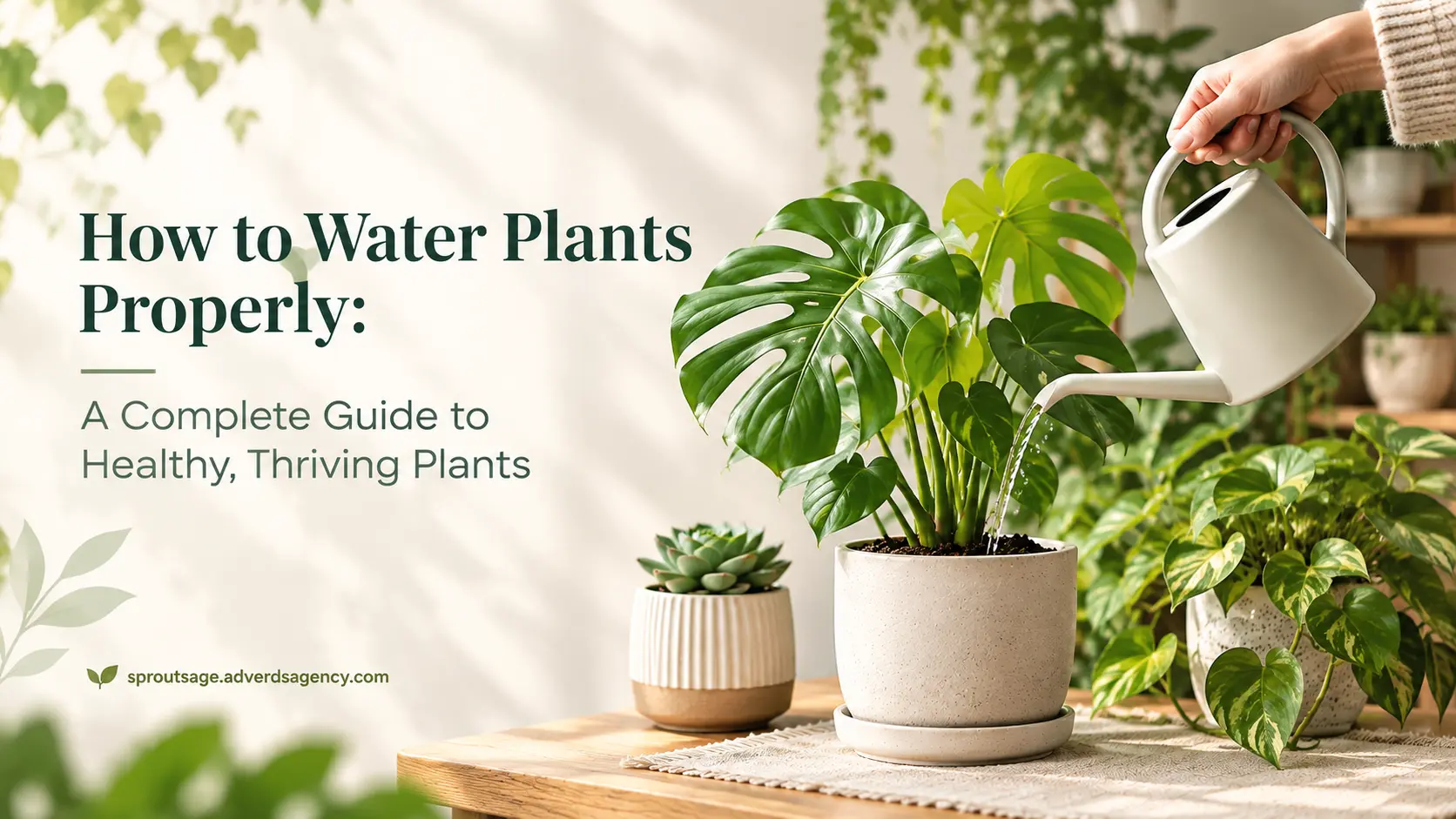
Introduction: Are You Watering Your Plants the Right Way?
Have you ever observed how the plant you love turns yellow, droops without warning, and stops growing no matter how much effort you put into its care? One may think that it simply needs more water, but that is not always the case.
Proper watering of plants is one of the most crucial skills to have for any plant lover out there. Not enough water could result in dehydration, while excessive water will cause drowning and eventually root rot. The trick is to know how much each specific plant needs.
From taking care of the indoor plants to nurturing your herb garden or tending to your flower beds outside, having the correct watering schedule can make a huge difference.
And you do not need a complicated watering system or special equipment to take good care of your plants. Knowing about soil moisture, understanding what your plants need and adjusting to their environment will simplify plant care considerably.
In the following guide, we will learn how to water plants properly, how often to water specific types of plants, how to detect watering problems, and what watering methods can be useful to your plants.
1. Why Is Proper Plant Watering Important?
Water helps plants stay hydrated, but it also has a number of other important roles.
- Nutrient uptake. Water carries nutrients from soil to roots.
- Photosynthesis Photosynthesis is the method by which plants use sunlight, water and carbon dioxide to create energy.
- Strength: Water keeps the leaves and stems firm and stable.
- Temperature control: Water leaves the plant through leaves, cooling the plant by transpiration.
- Root development: Good watering results in strong roots and helps the plant get oxygen and nutrients. But plants don’t necessarily need lots of water to stay healthy.
Nevertheless plants do not always need a lot of water to stay healthy.
When soil becomes waterlogged water fills air pockets and oxygen for roots drops sharply. Waterlogged soil can damage roots. Make roots vulnerable to root rot.
When soil dries out much roots cannot get enough water,for good growth.Therefore watering correctly means balancing soil moisture with oxygen for roots.
2. How Often Should You Water Your Plants?
One of the questions asked most frequently by those who love plants is, “How often should I water my plants?”
The answer to this question differs from one plant to another, and it’s based on many things, such as type of plant, pot size, type of soil, temperature, humidity, and amount of sunshine.
For instance, tropical plants that grow in hot rooms require more watering than succulents grown in cool rooms.
Below are some tips for watering your plants.
Indoor Tropical Plants
These plants like to be grown in moist soil that is not saturated with water.
Check your soil often and water when the top layer dries up sufficiently depending on the plant type.
Peace lily can become wilted when it needs water, but it is better to check the soil first.
Succulents and Cacti
Both succulents and cacti keep water in their leaves or stems. Therefore, they can survive in drier environments.
It is recommended to let the soil dry out completely between waterings. This will be specific to each plant.
This is especially true when growing succulents or cacti. You need a potting mix that drains well and drainage holes.
Ferns
Some ferns have a tendency to thrive in soils that retain moisture and are more humid; however, it depends on the specific species.
Soil should be checked often and make sure that sensitive species do not become totally dry. It is also important to make sure there is proper drainage.
Herbs and Vegetable Plants
Plants growing in pots tend to dry out easily especially in sunny weather.
Be sure to check the soil and water. Plants that have just germinated will need to be monitored more frequently than mature plants.
Keep in mind that these are guidelines and you should always factor in your plants specific requirements before watering it.
3. How to Tell When Your Plants Need Water
In order to stop watering your plants on a certain day of the week, you should learn to determine when they require watering.
Some tips will help you to determine whether you have overwatered or under-watered your plants.
Check Soil Moisture
The simplest way is to insert a finger into the soil.
- Insert your finger about 2-5 cm into the soil, depending on the size of the pot and needs of the plant.
- If the soil is moist, you may need to postpone watering.
- If the soil is dry, it is necessary to find out whether the plant requires watering.
- If the soil remains wet for too long, try to find out how the drainage works and how often you water the plant.
Keep in mind that different plants like different soil moisture. The soil moisture rule should not apply equally to a cactus and a fern.
Lift the Pot
It is common for a dry pot to be lighter compared to a pot full of moist soil.
Feel the weight of the pot after watering.
The pot will lose weight as the soil continues drying.
With practice, it can be used to determine when the plants require water.
Leaf Inspection: Your plant leaves will tell you a lot.
Underwatering symptoms can be seen if:
- The leaves droop.
- The leaf edges appear dry and crisp.
- The soil moves from the pot sides.
- Stunted growth due to long dry spells.
Overwatering can be evident by the following:
- Yellow leaves.
- Soil moisture.
- Mushy roots.
- Unpleasant odor coming from the soil.
Note that these signs can be brought by other factors such as pests, nutritional deficiency, temperature, and poor light.
Always check the soil and growing conditions before deciding that watering is the problem.
4. The Best Way to Water Indoor Plants
The timing of watering is vital, but how you water the plants is essential too.
Learn these techniques that will allow you to create a good watering routine.
Step 1: Determine the Needs of the Plants
Before starting to water the plants, make sure that you know their preferences regarding the soil moisture levels.
Step 2: Water the Soil Directly
With regard to most of the indoor plants, the water should be poured on the soil surrounding the bottom of the plant.
The water should be applied evenly across the soil surface instead of being poured in one location.
It is important not to leave the water standing at the centre of those plants that develop crown rot.
Step 3: Allow Excess Water to Drain
For most potted plants with drainage holes, water deeply until water starts to run out through the bottom.
It will moisten the roots rather than just the top soil.
Then empty the saucer or the larger pot after that because the roots must not be left in water.
For plants with particular needs in watering, refer to their own species instructions.
Step 4: Check the Soil Again
After watering, let the extra water drain off and see how soon it dries out.
If the soil stays moist for a very long time, you should check whether the pot is too big, whether the growing medium holds on to too much water, or whether the plant is being watered too often.
On the other hand, if it dries out extremely fast, the plant might require more frequent monitoring.
Step 5: Adjust Your Routine
The water requirements of your plant will vary according to the season.
Some plants need watering during their growth stage while some need it when they have slowed down their growth or when the weather is cold. The best thing is not to follow any routine but to keep checking the plant and the soil.
5. Common Plant Watering Mistakes to Avoid
Plant lovers may make watering mistakes even though they are experts. Identifying some of these common errors can avoid damage to your plants.
Watering Too Frequently
One of the major errors committed is watering just because that day is a specific day of the week.
If the soil has adequate moisture, watering would result in lack of oxygen in the soil for the roots.
Solution: Test moisture content in the soil prior to watering.
Giving Plants Too Little Water
Lightly sprinkling water over the soil may not provide enough moisture for the entire root system.
Some potting mixes also become hydrophobic when extremely dry, causing water to run down the sides instead of soaking into the soil.
Solution: For most plants that need thorough watering, apply water slowly and evenly until the root zone is moistened and excess water drains away. If the soil repels water, rehydrate it gradually.
Using Pots Without Drainage Holes
Decorative pots can look attractive, but containers without drainage holes make it harder to manage excess water.
Water can accumulate at the bottom, increasing the risk of root damage.
Solution: Choose pots with drainage holes or use a nursery pot inside a decorative outer pot. Remove the inner pot for watering and allow it to drain before returning it.
Following the Same Schedule for Every Plant
Different kinds of plants need varying amounts of water to be properly taken care of.
Watering all the plants with the same quantity of water is not feasible in all circumstances.
Solution: Put together plants that have the same need for water.
Ignoring Seasonal Changes
The temperature inside, sunlight exposure, humidity levels, and plant growth vary depending on the season.
A watering schedule that is effective during summer may result in overly moist soil during winter.
Solution: Regularly check the soil moisture level in times of changes and alter your watering schedule accordingly.
6. Does the Time of Day Matter When Watering Plants?
Watering the plant whenever there is an indication that it needs water is more critical than doing so according to a particular time of the day.
Yet, there might be times when the time at which you water plants may make a significant difference.
In the case of plants grown outdoors, watering in the morning is considered to be beneficial, especially since it gives the water enough time to get to the roots before the temperature rises.
Watering plants in the late evening may make the leaves wet for a longer period, depending on the climatic conditions. This may lead to certain infections that thrive in wet leaves.
In the case of indoor plants, watering the soil is the key. If your plant needs water, do not hesitate to water it even if you miss your ideal time.
7. How to Choose the Right Water for Your Plants
The water you use can influence plant health, particularly for species sensitive to minerals or chemicals.
Tap Water
Tap water can work well for some common indoor house plants.
But water quality differs from place to place. Some water sources are full of dissolved minerals, and some plants react to this kind of environment.
When you find mineral buildup on soil or pot, or any damage to leaves due to an unknown reason, you should test the quality of your water.
Rainwater
The rainwater may prove to be very beneficial in the case of some plants because they thrive on low mineral content water.
It should be collected in a clean receptacle.
Filtered Water
Filtration could be beneficial for plants that are sensitive to certain elements present in tap water, depending on the type of filter you have.
There are differences in which elements each filter can remove, so you should be familiar with the elements that your filter removes from the water.
Advice: You don’t need to buy fancy water for all of your indoor plants. Instead, begin with your local water and then adapt when you feel the need to.
8. Essential Watering Tools for Plant Enthusiasts
You don’t require an abundance of garden equipment in order to water your plants correctly. A few pieces of useful equipment will go a long way in simplifying the procedure.
Narrow-spouted watering can: This helps water penetrate the soil, without flooding other areas around it.
Moisture meter: Gives extra assurance about moisture levels, depending on the kind of soil and location.
Pots with drainage holes: Help get rid of excess water and avoid waterlogged roots.
Well-draining potting soil: Assists in balancing moisture retention and air circulation in the root area.
Saucers: Help to capture excess water if they are emptied after watering.
Select equipment which will work well for your specific plants, the space you have and your expertise.
If you are setting up your first indoor garden, select an appropriate watering can and pots with drainage holes.
Frequently Asked Questions About Watering Plants
1. How frequently do I need to water indoor plants?
There is no standard watering plan for indoor plants because it depends on the species of a plant, its container size, soil type, temperature, humidity and sun exposure. You should monitor moisture level and water the plant when the soil is at the desired moisture level.
2. Is it better to use top or bottom watering?
Both methods can be used.
Top watering is a good way to wet the soil and wash out some of accumulated salts due to water drainage through the pot.
Bottom watering might help drying potting soil to absorb moisture, but it must not leave the plant in water.
3. What are the signs of overwatering?
Typical signs are constant soil moisture, yellowing of leaves, soft roots, bad smell of soil and poor growth rate. But there are other reasons for such symptoms. You should check the condition of roots, drainage and soil conditions.
4. Do I need to mist my indoor plants instead of watering them?
No, because misting is not an alternative to watering the soil because it provides minimal amount of moisture to roots and does not increase humidity properly. Water the
Final Thoughts: Build a Better Plant Watering Routine
The right way to water your plants doesn’t need any guesses and fancy schedules. First of all, you have to learn about your plants, look at the soil and take notice of changes in the environment of their growth.
Keep these basic principles in mind:
- Make sure that soil needs water before watering.
- Know the watering needs of each plant variety.
- Water well if needed, let the excess water drain away.
- Use properly drained pots and proper soil mixture for planting.
- Make adjustments according to seasonal and environmental changes.
By observing your plants and practicing enough, you will be able to make watering one of the easiest tasks.
Want to learn more about taking care of your plants? Find everything necessary for taking care of plants in Sprout Sage!